

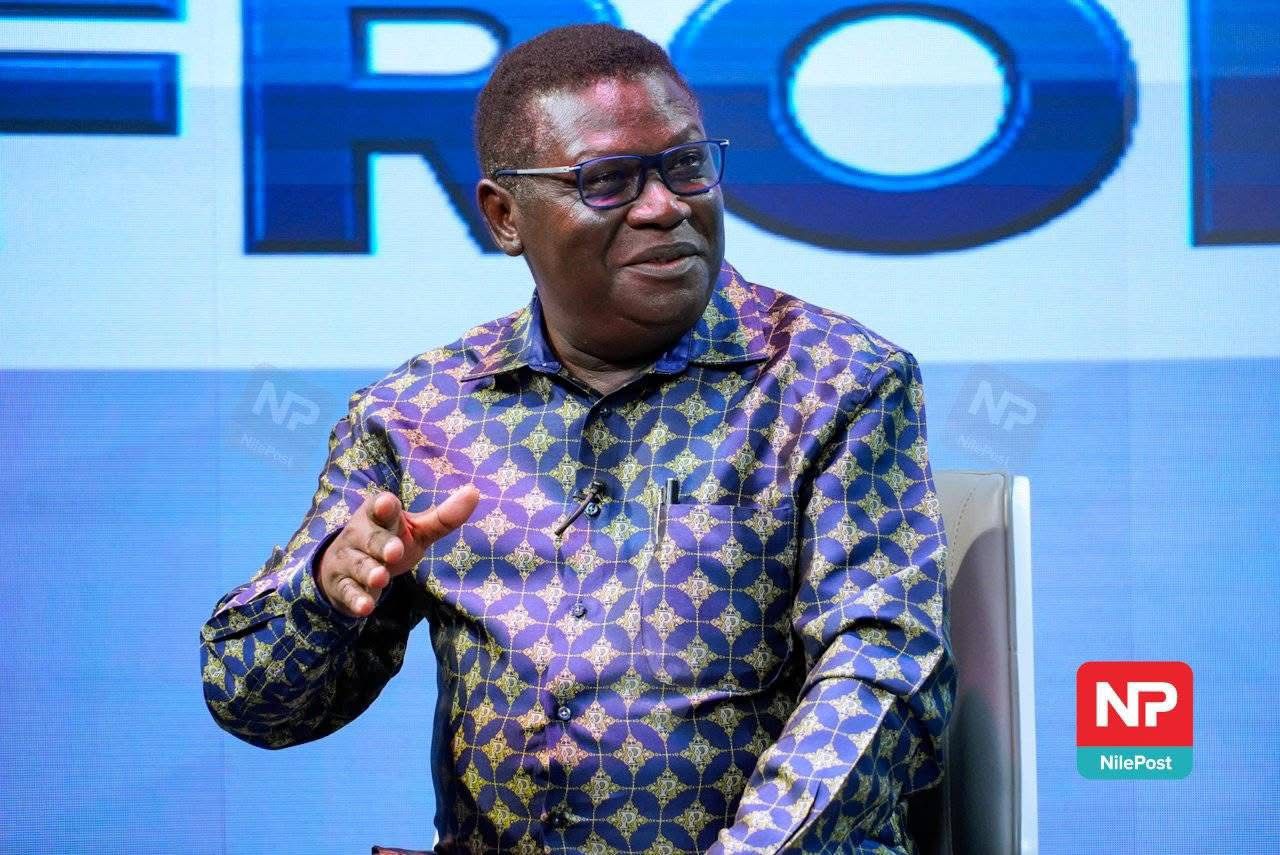
The President of the Democratic Party (DP) and Minister for Justice and Constitutional Affairs, Norbert Mao, has said his candidature for the Speakership of the 12th Parliament is both viable and timely, citing growing public expectations and the need for institutional stability as Uganda navigates a sensitive political period.
Speaking during NBS Frontline on Thursday, Mao said discussions around his suitability for the Speakership gained momentum following his victory in the Laroo-Pece parliamentary by-election, prompting him to reflect deeply on the role Parliament plays in the country’s governance.
“When I won the Laroo-Pece parliamentary seat, a lot of people started talking about the prospect of me being Speaker of Parliament,” Mao said, noting that although the Speaker is elected by Members of Parliament through a secret ballot, the institution ultimately represents the will of the people.
“Parliament is primarily a people’s house, and those who vote for the Speaker represent citizens who do not sit in Parliament. At this point in our history, citizens have expectations. I reflected on this and decided that it is the right thing to do,” he said.
Mao said he is confident about the strength of his bid and disclosed that he will soon constitute an exploratory committee to guide structured consultations with political actors across party lines.
“I believe my candidature for the Speakership is viable. In the coming days, I will announce what is called an exploratory committee. I want to present myself as a suitable alternative to what we already have,” he said.
He argued that the office of Speaker should be anchored in institutional authority rather than personal influence, cautioning that misuse of the position could undermine national stability.
“What Parliament needs is institutional power, not personal power. Secondly, the Speaker should not undermine the stability of the country. I believe in stability. I come from a part of Uganda that knows what war is, and we therefore need stability,” Mao said.
Mao linked his Speakership bid to broader national concerns, particularly leadership transition and cohesion, noting that strong institutions are essential as President Yoweri Kaguta Museveni advances in age.
“As Museveni progresses through his sunset years, we desire to see a beautiful and glorious sunset. This race is not about me. It is about keeping the country stable and focused on nation-building,” he said.
Earlier this week, Mao told journalists in Kampala that the cooperation agreement between the Democratic Party and the ruling National Resistance Movement places him at an advantage in the Speakership race, given the NRM’s numerical strength in the incoming 12th Parliament.
He revealed that several Members of Parliament have already reached out to him with assurances of support, including legislators from outside the DP. Although the Democratic Party currently has only six MPs, Mao said the partnership with the NRM, combined with his experience in politics and governance, enhances his prospects.
Some of Mao’s supporters have compared his leadership style to that of the late former Speaker Jacob Oulanyah, whom they describe as conciliatory, inclusive and capable of uniting Parliament across political divides.
Mao also disclosed that he has begun consultations with President Museveni within the framework of the DP–NRM cooperation agreement, signaling that his Speakership bid is rooted in dialogue, consensus-building and institutional continuity rather than confrontation.
